In 2013, I took a year away from software to work as a bike messenger in Geneva. It remains one of the best experiences of my life.
Stefan Sagmeister’s TED talk on the power of time off nudged me to try something I had always wanted to do: something completely different from the previous nine years. After my computer science degree, I had gone straight into a software engineering job. After a few unsatisfying projects, the final straw came when the mobile app I had worked on for a year and a half was shelved by management and never released. So I quit. I had landed that first job without ever applying or writing a cover letter, so my application to Krick was probably a bit naive. But it was completely honest. Here it is, in the original French:
Depuis que j’ai vu des épisodes de Streetwise sur la TSR le samedi matin quand j’étais gamin, j’ai été fasciné par les coursiers à vélo. Avant l’avènement d’Internet, les images de coursiers étaient rares, et je n’en ai en réalité pas revus jusqu’après avoir déménagé à Lausanne pour mes études. Autant dire qu’avec la topographie vallonée, les coursiers lausannois étaient de sacrés spécimen. A chaque fois que j’en voyais un, je me disais qu’il faudrait un jour que j’essaie aussi.
Ce jour est arrivé. Pendant les études, je n’avais pas le temps de me consacrer à autre chose. Puis je me suis fait embaucher directement après avoir décroché mon diplôme. Après plus de 8 ans chez le même employeur, j’ai envie plus que jamais de changer d’air; un désir d’une activité plus physique, à l’extérieur, avec une équipe soudée et au contact des gens, qui contraste avec des journées au bureau à faire du développement web pour des clients totalement anonymisés par les strates administratives de l’entreprise. Je suis venu habiter à Genève en 2004 pour travailler dans l’informatique, mais également pour ma passion, le BMX. Je pratique toujours plusieurs fois par mois, si ce n’est plus prudemment qu’il y a quelques années. J’ai également été actif dans une association genevoise qui collaborait avec la ville de Genève pour mettre en avant le BMX. J’ai aussi rendu service à une connaissance qui oeuvrait pour la promotion des déplacements à vélo en ville, chose qui me tient à coeur. En effet, je ne possède à ce jour toujours pas de voiture, je fais quasi exclusivement tous mes déplacements en singlespeed ou à pied, peu importe la météo. Je pense qu’au bout de presque 9 ans, je me repère très bien dans l’agglomération, malgré une méconnaissance notoire des noms de rues. Lors de mes nombreux voyages avec le BMX, j’ai toujours adoré me faufiler dans le trafic des villes et découvrir de nouveaux environnements urbains.
Même si mes activités sportives ne sont pas trop typées endurance, je pense posséder les qualités physiques requises au quotidien du coursier à vélo. Les autres tâches comme l’administratif ne sont pas un problème non plus, au contraire. Je suis une personne très ordonnée et organisée.
Every word of it is true. I was hooked from the first episode of Streetwise, and I also remember a TV documentary from the early nineties about New York messengers riding brakeless in hockey helmets and hanging on to cars. Until then, I never had the time (studies, military service), felt I should stick to a regular office job, or doubted I was fit enough. One day, I decided to just go for it.
Here are some facts and stories from that year.
The daily routine
As an engineer, I had flexible hours but still a routine. At Krick, the hours were fixed: 8:00 to 18:00. I got up at 6:45 and had breakfast, which I had not done before, because I would be pedaling for the next four hours. During the first weeks, I used breakfast to go over every street where I had made a pickup or a delivery the day before, placing each address on a mental map. I doubt my colleagues did this, but it helped me learn my way around quickly. I left home at 7:30 and got to headquarters around 7:45.
At first, I had to stop for every order that came in over the radio and write it down in full. An order has a pickup and a delivery address, but it can also include a door code, a specific sender or recipient within a company, a price breakdown (base, extra distance, extra weight, express), or be a nationwide delivery via swissconnect. On busy days, I rode with my notepad in one hand. After a few weeks, orders start to look alike, you know the street names, and you no longer need to write anything down, unless you suddenly have more than three deliveries at once. Sometimes runs become so similar that you go on autopilot and end up at the wrong place; it happened to me twice, luckily for deliveries within the city. You also learn to watch out for similar-sounding streets: in my first week, I nearly rode to Rue de Bandol instead of Rue De-Candolle. PHK (Philipp Krick, the owner and usually our dispatcher) hated repeating himself, so I rarely asked twice when unsure.
Krick had three kinds of shifts:
- : 8:00–12:30 or 9:00–13:00
- : 13:00–18:00, or occasionally 13:30–18:00
- : 8:00–18:00, 9:00–18:00 or 9:00–19:00. Krick officially closes at 18:00, but pickups ordered just before closing can mean delivering until 19:00. Once, I ended up in Founex around 20:00 on a Friday evening.
My favorite was the 9:00–13:00 shift: most companies get going around 9:00, and there are often urgent deliveries just before noon.
At first, I let PHK schedule me for , or shifts, and add more each week until I reached my limit, which turned out to be eight shifts a week. Since I still wanted to ride BMX after work and on weekends, I settled on six, preferably , so I would have to get up early but keep my afternoons and evenings free.
Bike messengers are underpaid. The system mostly works because the job attracts students and people who are passionate about bikes. At Krick, your pay is a percentage of your turnover. The unwritten rule is 38% to start, 43% after three months, and 48% after six months to a year. I was lucky to reach 43% after only three weeks, and 48% after four months. You might think turnover depends on how fast and efficiently you ride, but not really: the dispatcher rightly spreads deliveries evenly, and if you happen to be in the right place at the right time, you can get five or six deliveries at once. The price of a delivery was:
- a base price of CHF 16 within the city, delivered within an hour of the order
- CHF 5 for each additional kilometer
- CHF 2 for each additional kilogram
- CHF 16 extra for delivery within 30 minutes instead of an hour
- swissconnect deliveries, a world of their own
An hour for a delivery within the city may sound generous, but the messenger may already have other deliveries and be far from the pickup point. It is up to the dispatcher to know where everyone is and give each delivery to the right messenger.
This chart of my hourly pay, day by day, shows large fluctuations driven by factors you cannot really influence, although I did improve a little over time. It made no difference whether I worked , or . With only one year of data, I cannot tell whether there are seasonal effects: there was a bit less work in summer and a bit more at the end of the year, but it barely shows in the pay. At first, PHK rounded the pay up to CHF 20 an hour (grey dots); after that, it ranged from CHF 15 to CHF 43 an hour. It is hard to say whether any weekday paid better. Maybe or ?
The next chart shows that pay was not directly tied to the number of deliveries either. Compare, for example, pay with deliveries: some peaks in one chart do not appear in the other.
While the two previous charts show hourly pay and deliveries per hour, the next one shows daily totals; grey bars mean missing data. Clients pay either in cash or on account. At Krick, messengers keep the whole cash amount rather than their percentage of it. It is simpler for PHK, but it means you receive a large part of your monthly pay in cash every day, which takes some discipline not to spend too quickly. I ended up depositing it in my bank account to keep track of my expenses, as I always had.
That is enough about money. The point is clear: this job is underpaid.
The gear
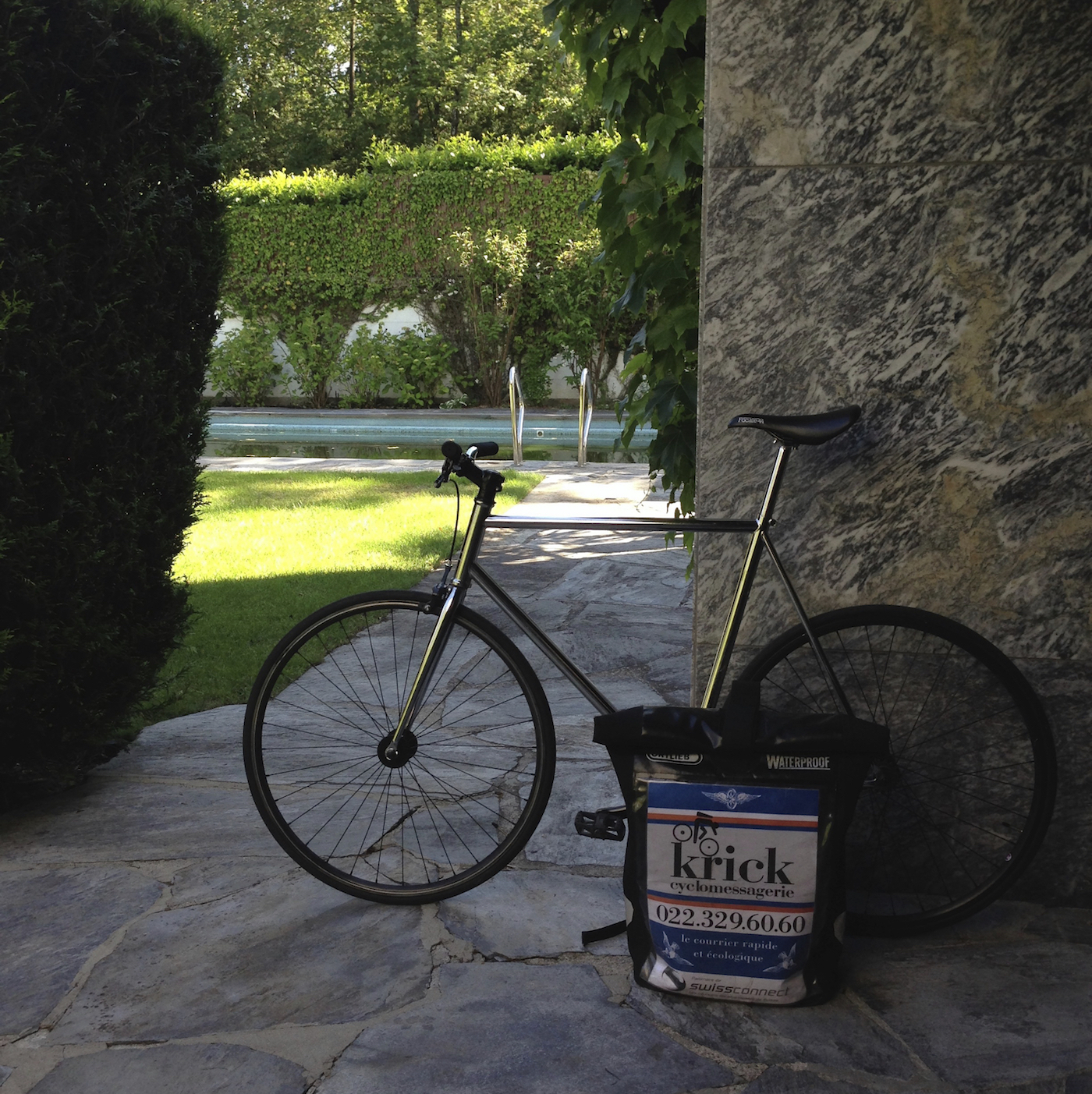
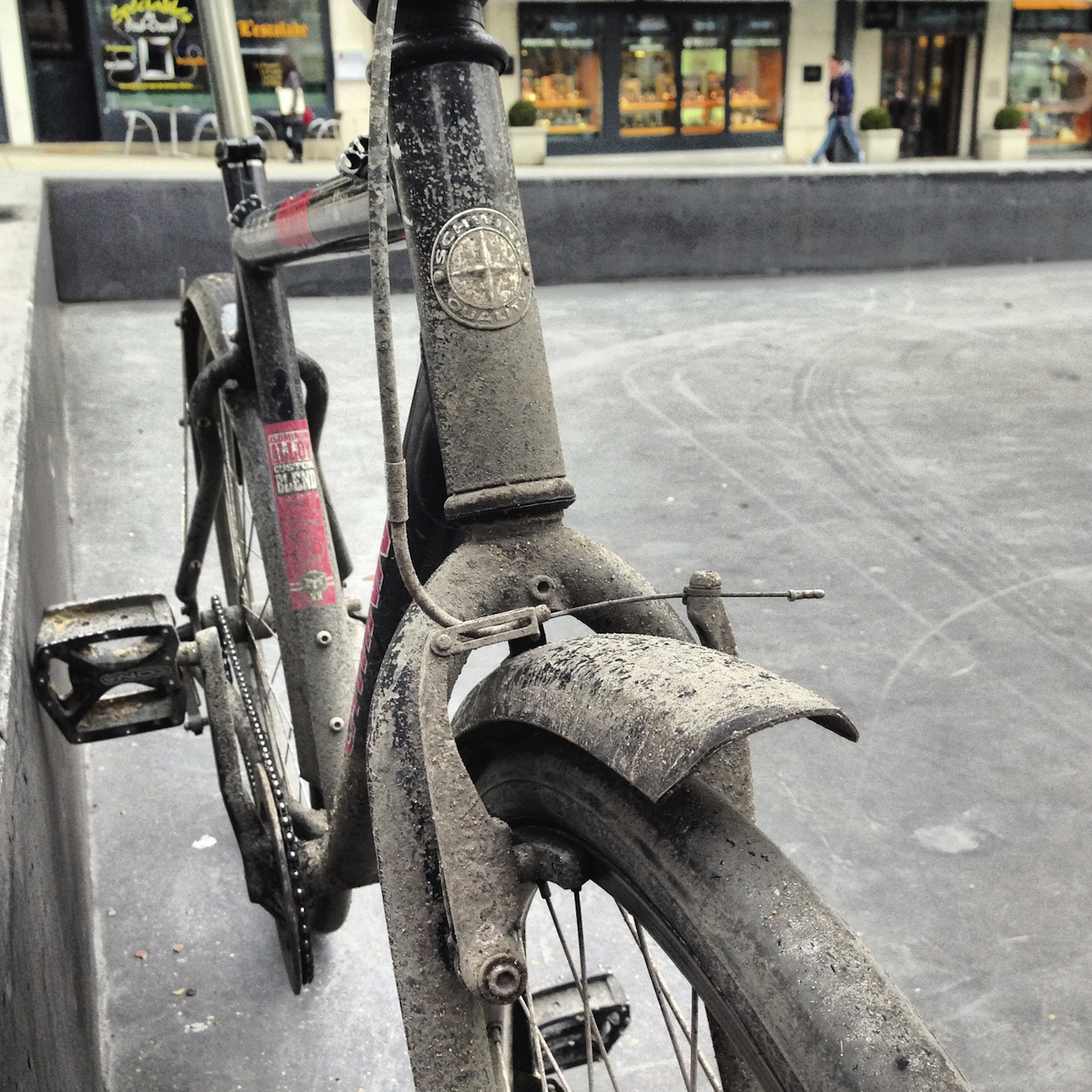
During the interview, PHK likes to look at your bike, and he always finds something wrong with it. He asked me whether I liked tinkering, as my Schwinn apparently looked fragile. I told him I had ridden it like that for years without problems. Of course, riding your bike to work and riding it for work are two very different things, and the gear takes a beating. In the first days, I lost a crank bolt and had to kick the crank arm back in every few hundred meters. Then I blew a bottom bracket bearing. Another time, the axle of my rear hub, which I had used for 15 years, snapped in two. I bought a spare set of wheels1, and two months later a new bike: the old Schwinn for rainy days and a new Focale for summer. I handled all of these mishaps without the dispatcher ever noticing.
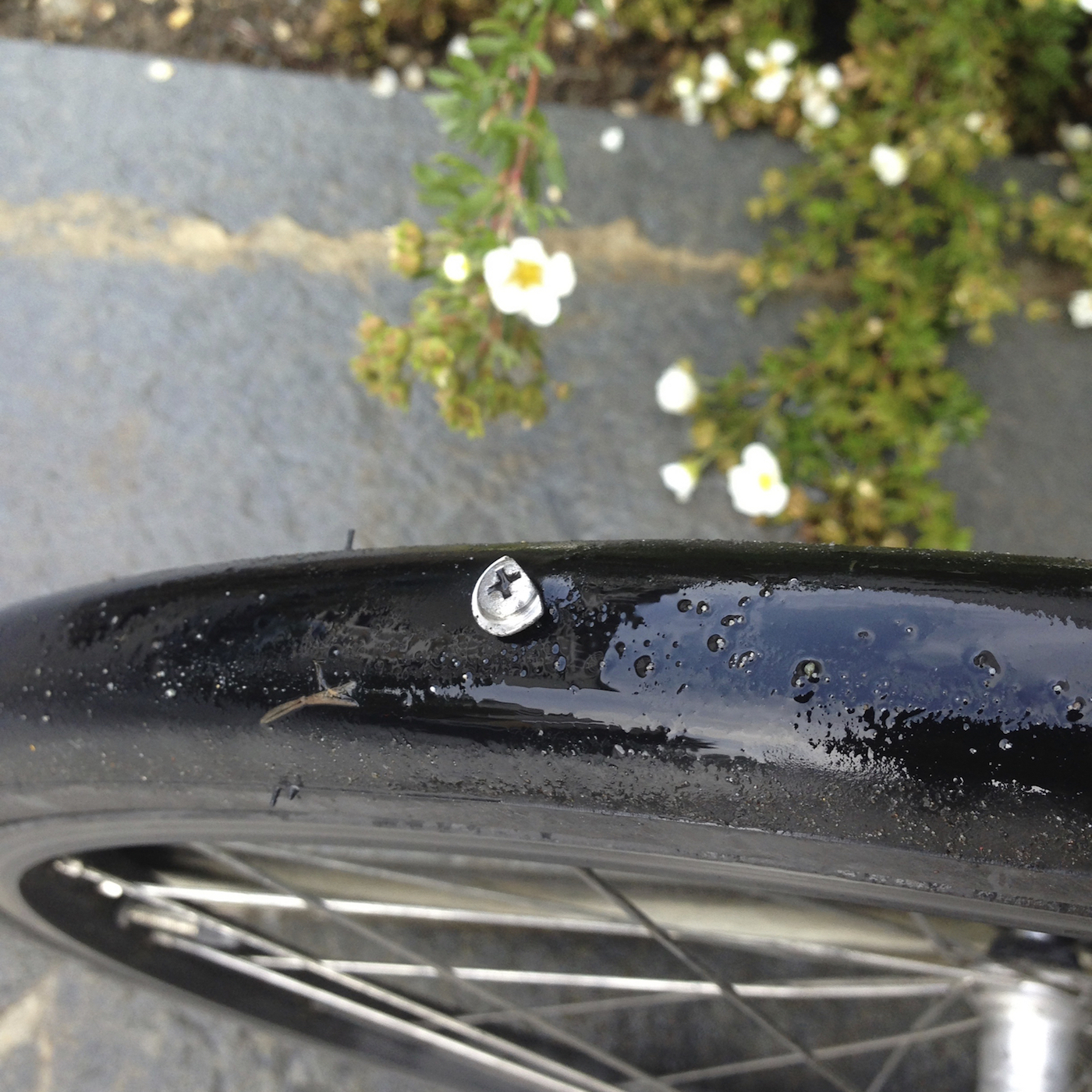
I always ride a singlespeed, not a fixed gear, and experimented with gear ratios: 48×16 on the Schwinn’s 26-inch wheels, then 36×14 with the cranks from my downhill bike after the bearing broke, then 44×16, a little light but cleaner because it needed no chain tensioner. The Focale ran 46×16 on 700c wheels. Then there are the consumables. You get a lot of flats, usually at the worst possible moment; my record was five in one shift, on a Friday morning in June. Flats are the worst part of the job, worse than cold rainy days. Worst of all is several flats on a cold rainy day: frozen fingers, cuts from the cold dry skin, and hands that end up wet, bloody and greasy. Clients were usually understanding; one even took out his first-aid kit and patched me up. Rain also wears out brake pads very quickly: during one non-stop downpour, I went through a pair in a single day. Surprisingly, I never broke a brake cable or a chain, though I always carried a spare length of chain, a chain tool, pliers and a brake cable.
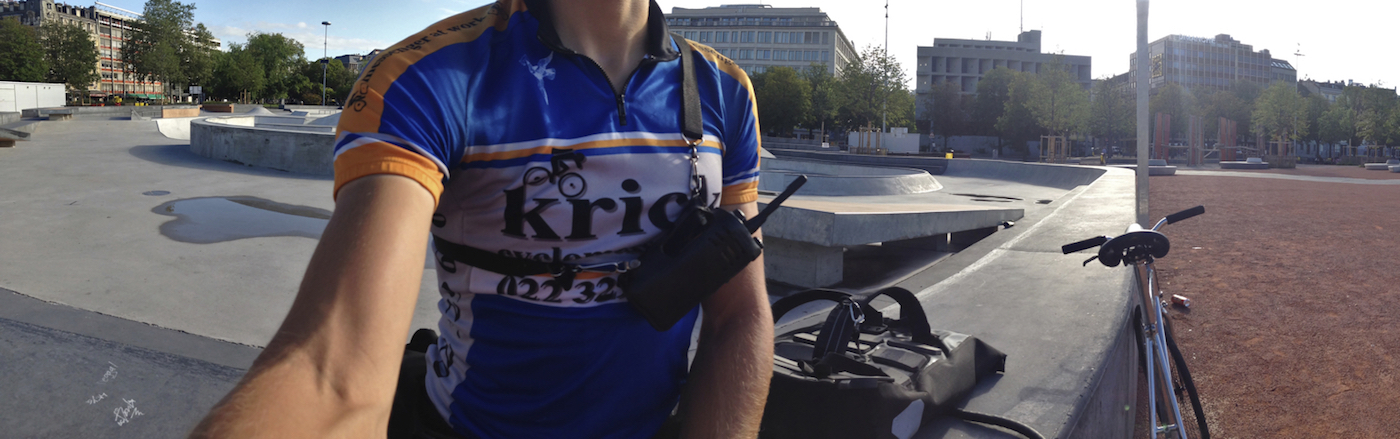
Beyond the bike, there is plenty of other gear. I already had a helmet. Glasses are impractical with sweat, rain and fogging, so I bought contact lenses, but used fewer than a quarter of them: once I knew my way around, I no longer needed to read street signs. I bought cycling shorts and tights (in black, as PHK requires), long-sleeved shirts and winter gloves, which I rarely wore because I could not use my phone or write with them on. Krick provides a long-sleeved and a short-sleeved jersey, a messenger bag and a radio for as long as you work there; the last three are shared between messengers, which is not very hygienic for the bag. Besides the envelopes, parcels, blood samples and flowers you deliver, your bag should hold a few swissconnect bags and a first-aid kit for your bike. With two bikes, I needed two sets of tools, one for quick-release wheels and one for 26-inch wheels, and had to remember to take the right set for the bike I was riding. Depending on the weather, you also need spare clothes, since you cannot count on going back to headquarters during a shift.
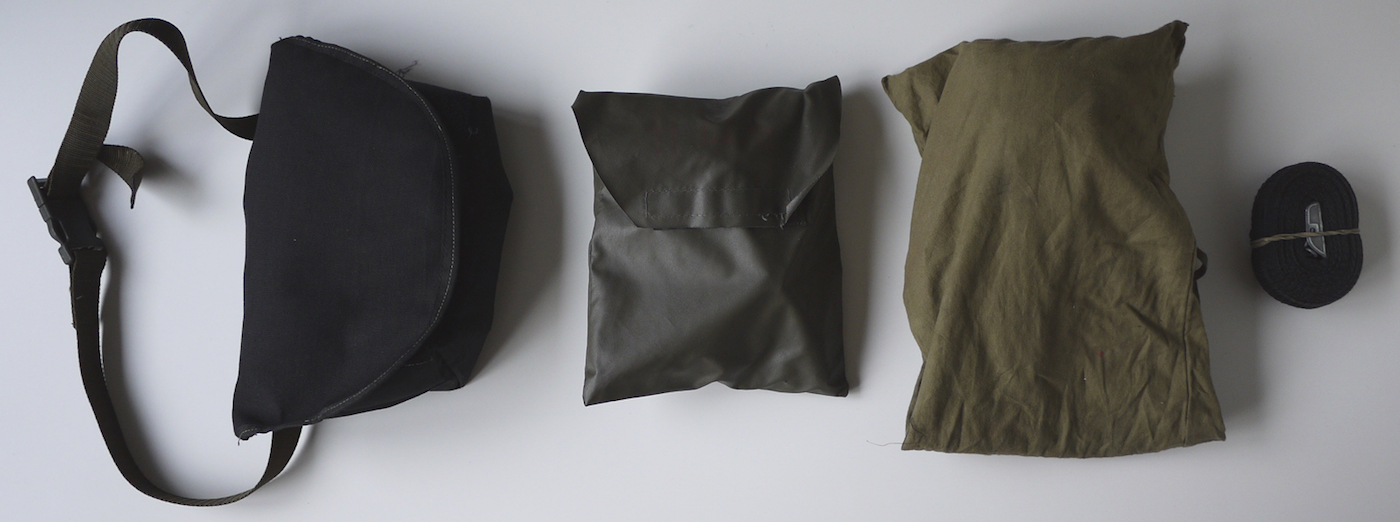
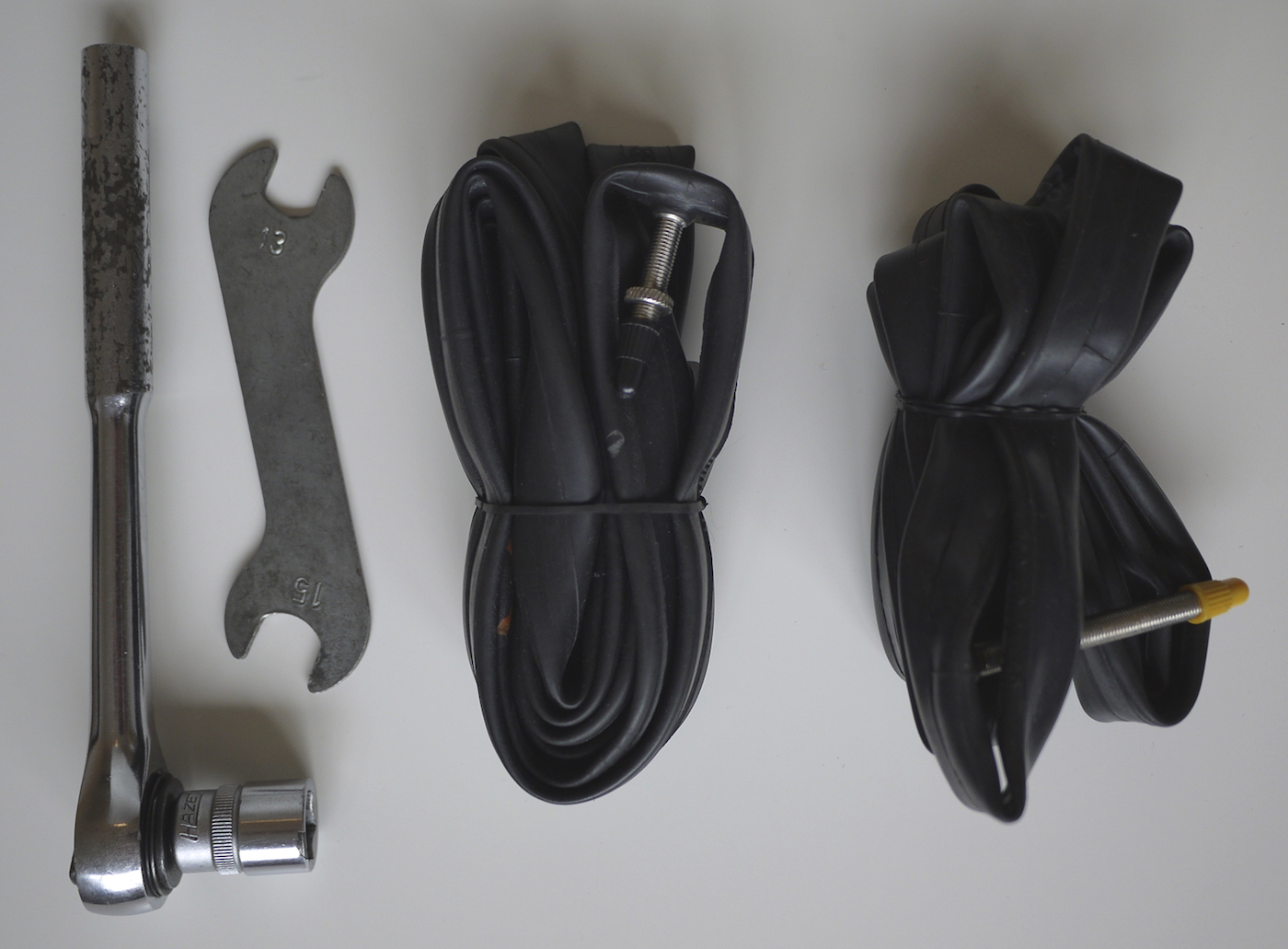
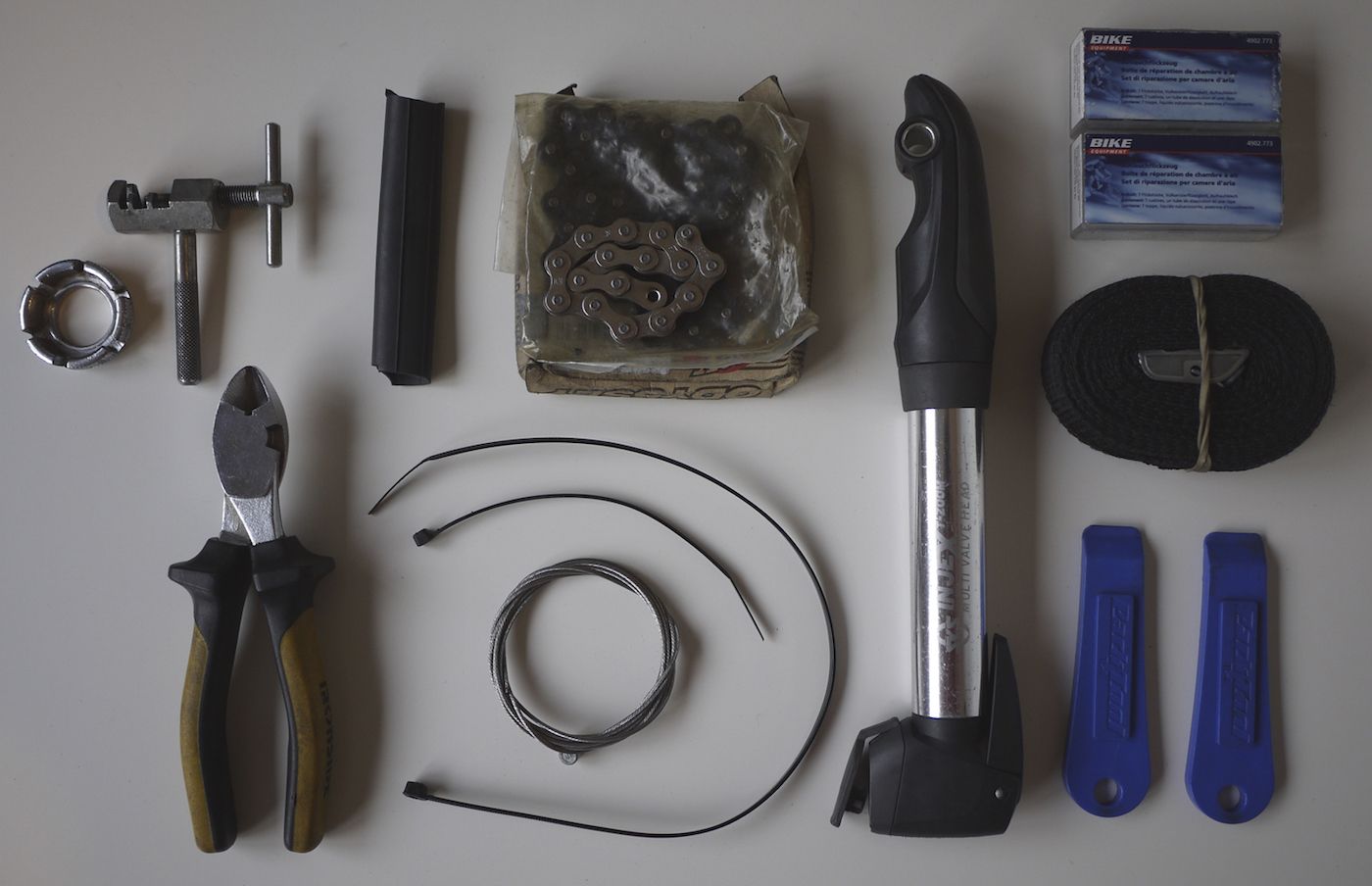
I still have mixed feelings about the radio. Compared with dispatching by phone, it is more immediate: the dispatcher and all messengers share one channel, everyone hears everything, which helps when things are unclear or busy. But its range is limited, PHK did not appreciate it when you did not know where the radio stopped working, and two people talking at once, which happens surprisingly often, made him furious. In the end, dispatching happened over the radio and the phone, which somewhat defeats the purpose. In noisy streets, in the rain or near construction sites, you cannot hear anything; an earpiece would have helped, but the radios used a proprietary connector.
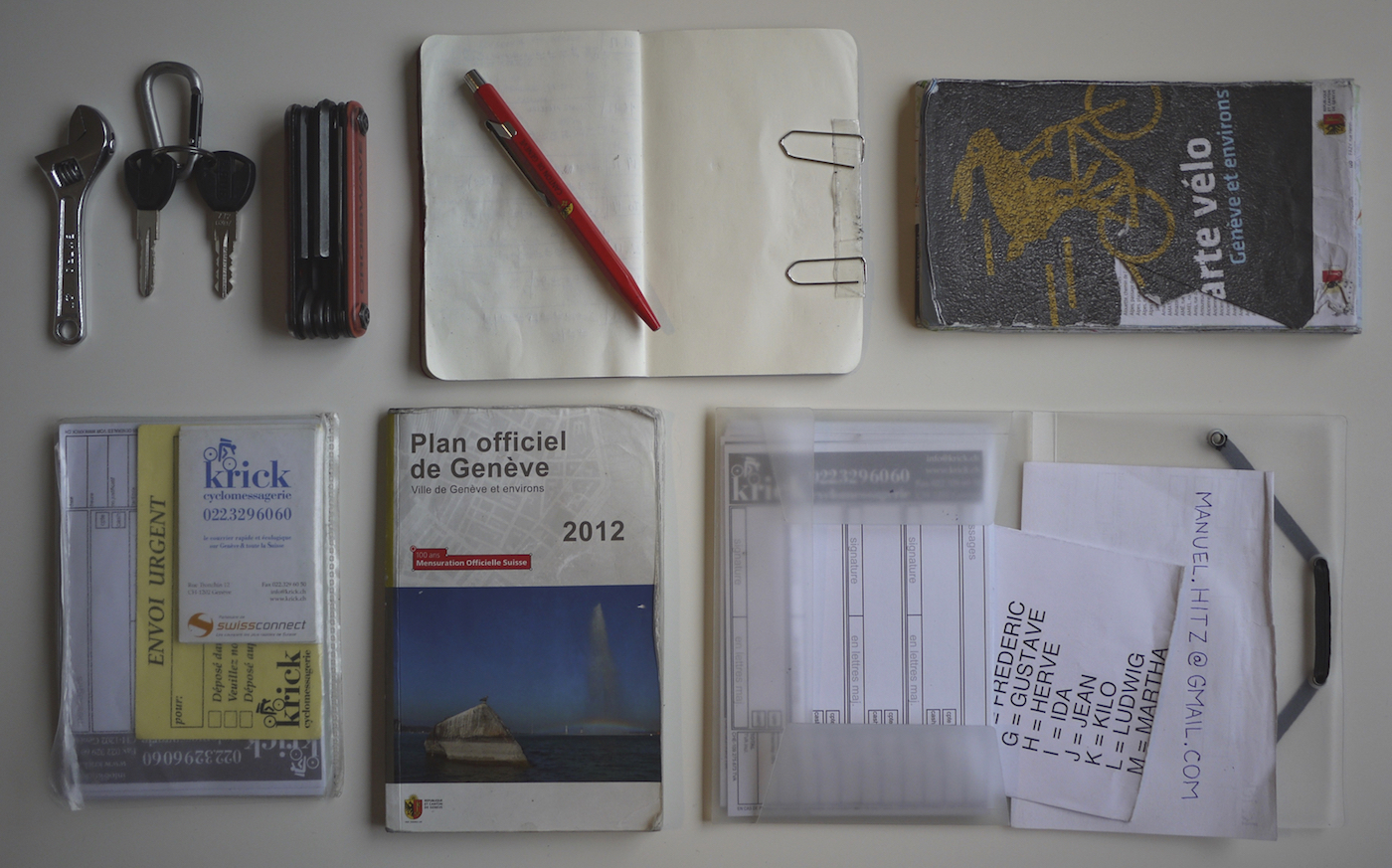
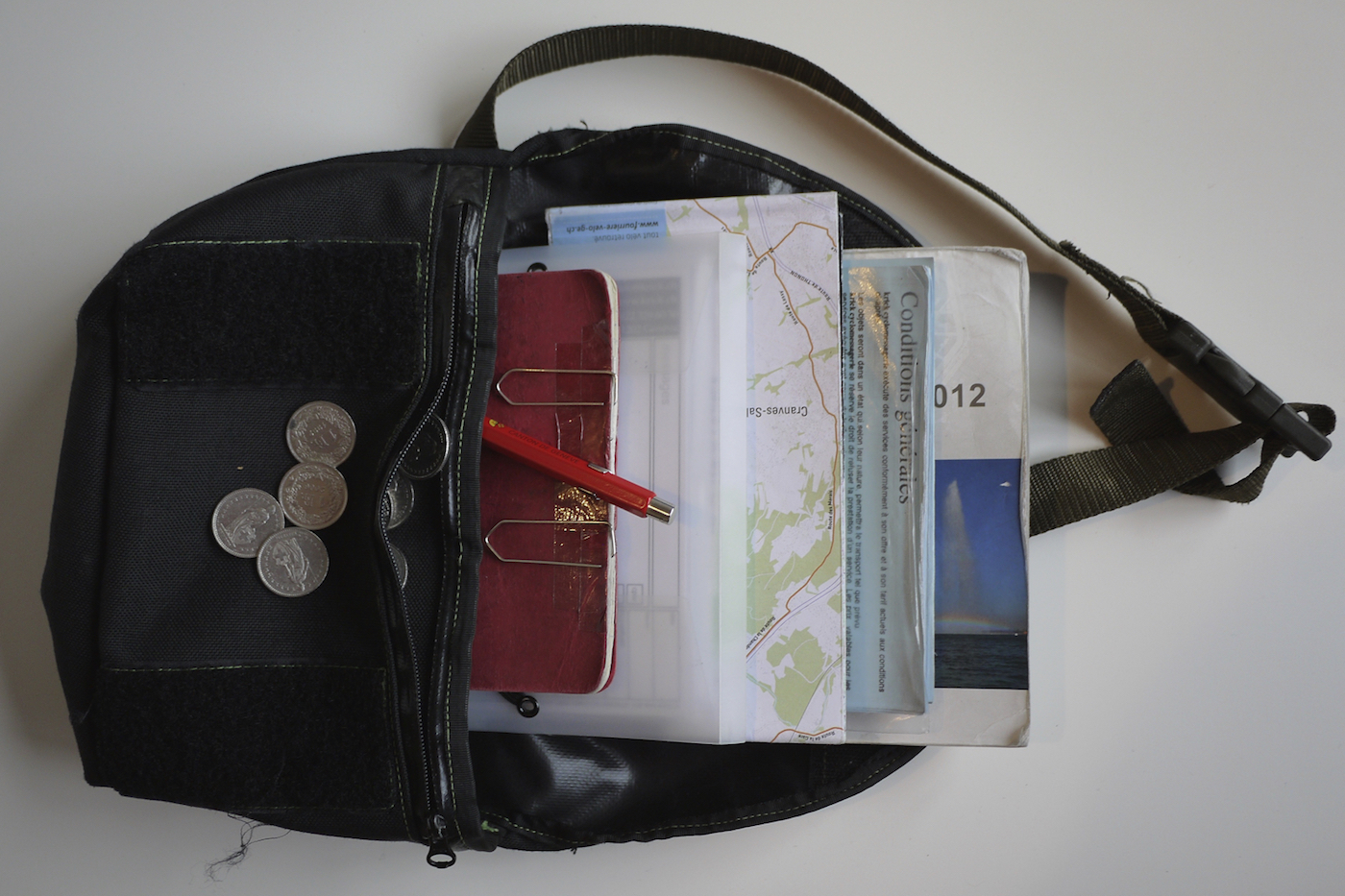
Yoann, a colleague, gave me his old hip bag. Had I stayed longer, I would have had a more compact one made. I mostly used my phone to look up addresses, but kept two paper maps as a backup. The hip bag also held my notepad and the delivery receipts in a small plastic case, which kept them dry and gave clients something to sign on. It also held a spare set of lock keys and the cash from deliveries paid in cash.
For the first six months, I rode with flat pedals. Then I tried clipless pedals for the first time. It scared me a little, but it turned out to be a very good decision, and I still ride clipped in on my Focale and on my NS Bikes mountain bike.
One of the few things I took from military service2 is that to be efficient in some situations, you need routines: a methodical way of doing things that does not require thinking, always in the same order, so you never forget anything. That suited bike messengering well, and I rarely forgot anything. Some of my routines:
- the contents of my hip bag were always in the same order, notebook with the pen clipped to it, receipts, map, so I could pull anything out without looking while riding one-handed in traffic
- I wore the hip bag on the right, because I am right-handed and because the front brake, the only one on my Focale, is on the left
- I operated the radio with my right hand, for the same reasons
- my lock key was clipped to the left shoulder strap of the messenger bag, again for the same reasons
- I locked my bike every single time, even at headquarters, so I would never leave for home with the key still on the shared messenger bag (it happened once, hence the rule)
- receipts were always kept in the order of my route, so if I forgot a house number, I could just glance at the transparent case
- at the end of a shift: lock the bike, empty the bag for the next person, and return the radio and any P.O. box key
On my phone, I relied on a few apps and bookmarks:
- Google Maps, to look up addresses rather than to plan routes
- Forecast.io, which had the best combination of accurate forecasts and good design among the many apps I compared; in this job, a reliable one-day forecast is essential
- the locations of public toilets
- an enthusiast website listing the composition of every Swiss train, useful to know where the baggage car would be for swissconnect deliveries
- the departure boards in the SBB app
I tried to use them as little as possible, partly out of pride, but mostly to make the battery last at least a full shift. That is also why I never tracked my shifts with Strava, even though I would have liked to. In hindsight, I should have bought a battery pack and recorded my routes.
The clients
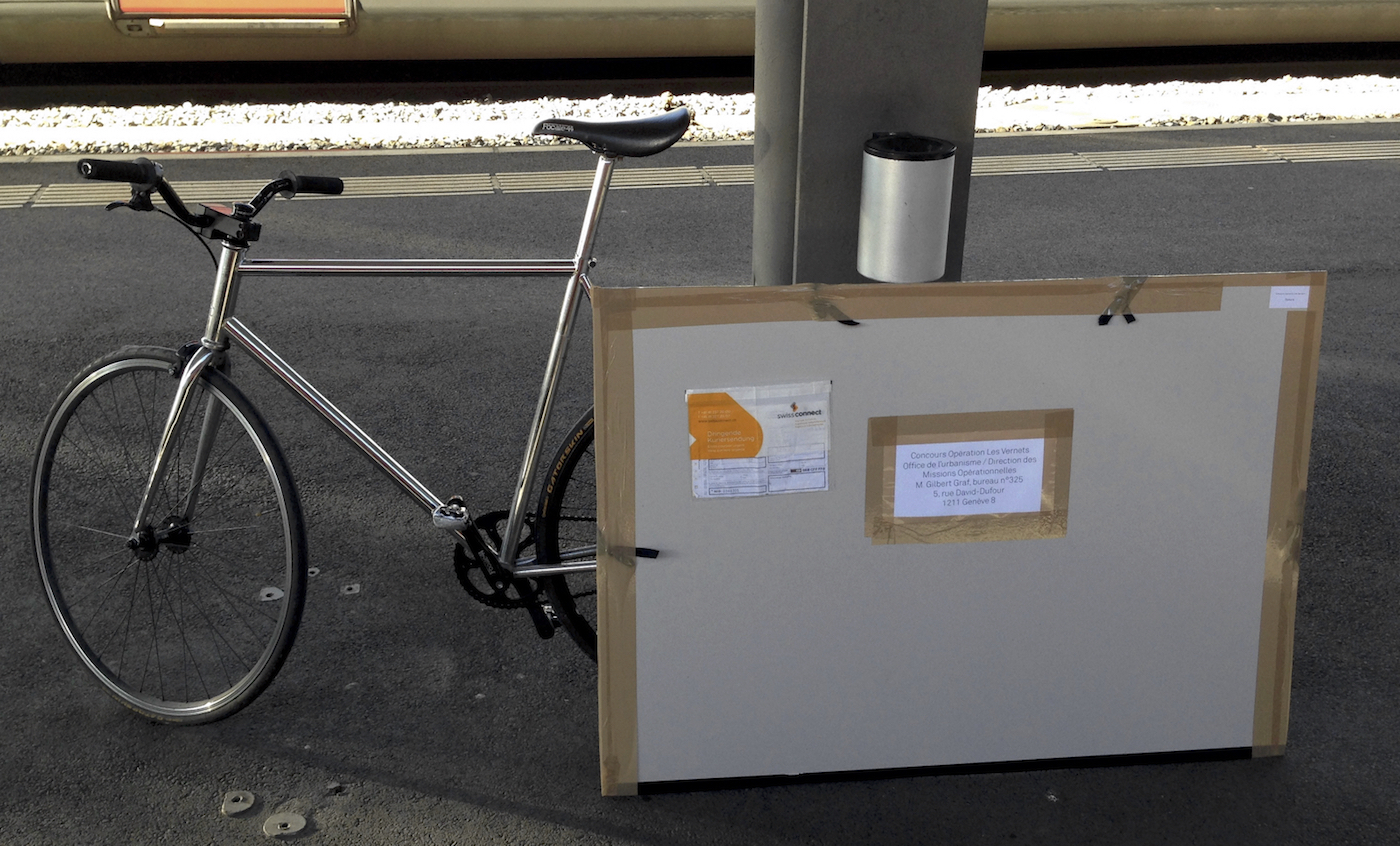
Bike messengers deliver almost anything that can be carried by bike, and Krick also had a cargo bike for larger loads. Most deliveries were A4 and A3 envelopes. We did not know what was inside, but the sender and recipient often gave you an idea: usually documents to be signed, or things that should not leave a digital trail. Krick’s clients included commodity traders, Geneva’s freeport, which is involved in the art trade, and many residents of Cologny with ties to finance, oil and real estate.
Because of its many international organizations, Geneva has a lot of consulates where people need visas and other documents, and international companies regularly need documents legalized. Messengers take them to places such as the Chamber of Commerce, the Commercial Register, the Arab-Swiss Chamber of Commerce and Industry, and the legalization office. Geneva’s official website described it this way:
Le service des légalisations s’occupe de légaliser les documents devant être reconnus, soit directement à l’étranger, soit via les représentations officielles établies en Suisse.
Les documents, tels que apostilles, légalisations simples, légalisations de traducteurs-jurés et copies certifiées conformes, peuvent être légalisés par le service.
Tout document étranger doit au préalable être légalisé par un notaire de Genève pour obtenir la légalisation officielle de Genève.
I only looked this up afterwards, and what I did back then makes a lot more sense now.
Geneva also has a large fine watchmaking industry, from the big brands to many small suppliers of watch parts in precious metals and stones, and bike messengers carry some of these, which I found pretty cool. Some design studios also used us, perhaps because we are faster than the post and handle unusual formats with less fuss.
Then there are more mundane tasks, such as emptying a client’s P.O. box every morning3, which is easy money. We also regularly carried blood and urine samples between doctors’ offices and labs, and dental impressions from dentists to dental technicians.
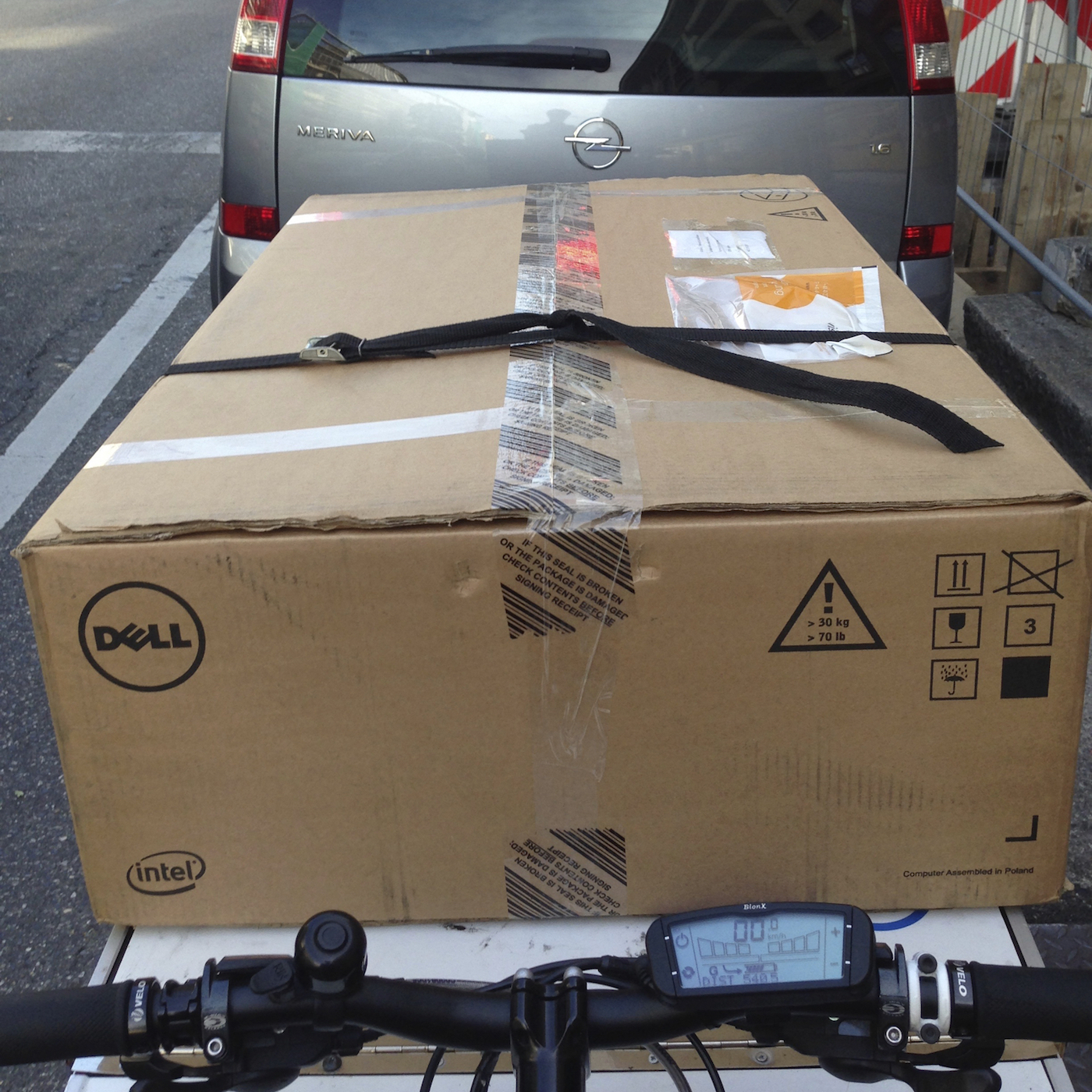
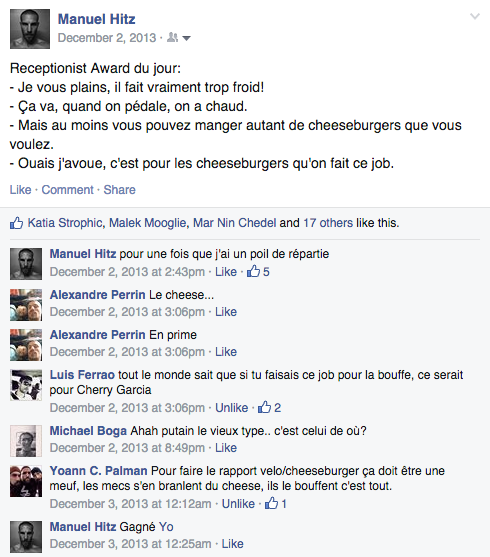
Interactions with clients are brief. We do not have much time, and some people look down on bike messengers. There is the usual small talk about the weather and how many kilometers we ride a day. When it rains, people pity you; when it is sunny, they envy you; and you hear the same remarks all day long.
I made my share of mistakes. PHK does not explain much about how things work, and my first legalization was confusing, but it went fine. My first real mistake was a legalization for a Japanese tobacco company. I was supposed to take a document to a notary and tell them Krick would pay the fee; the notary did not understand me, probably because I did not fully understand what I was saying either. The fee was charged to the client, and the situation was blown out of proportion. A couple of times, clients also did not give me enough money to legalize a document and then accused me of keeping it.
The city
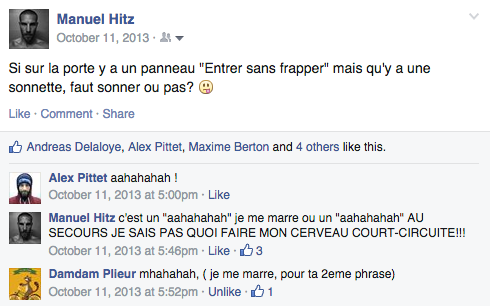
When I applied, I had lived in Geneva for nine years and knew my way around well, but not the street names, since I had never needed them. I was a little worried about it, but it was not a problem, and PHK does not expect you to know them on day one. Being a messenger is probably harder in an old European city than in an American one with a numbered grid. The only system we had, and I don’t know whether it is specific to Geneva, is that house numbers increase as you move away from the lake or the Rhône, which saves precious minutes on long streets.
At first, I disliked long deliveries out of the city to Meyrin, Plan-les-Ouates or Versoix. I had taken the job for the thrill of riding in traffic, not for road cycling. Over time, I came to enjoy them: you are out of radio range, so it is quieter, and you can relax a little while still pedaling hard. Ride to the same client in Meyrin twice in one shift and you realize how small the city is. You also end up knowing every bump and pothole on the busiest routes.
All that riding also means a lot of water, and a lot of bathroom breaks. A bookmark of the city’s public toilets seemed handy, but most were closed, broken or paying, so you plan your routes accordingly. The ones I used most were at Place de Saint-Gervais, the business center at Avenue Cardinal-Mermillod 36, Rond-Point de Rive, Place du Bourg-de-Four and the ICC. I could occasionally make a quick stop at home, and once even swapped bikes there after a flat right next to my apartment, without telling the dispatcher, of course.
The weather
One thing I do not miss is checking the hourly forecast every morning to decide what to wear, how many layers, which spare clothes and which bike to take. Most of the time, the weather is not a problem: you are working hard, so you stay warm; summer rain dries off; on hot days, you just drink a lot. The only real problem is cold and wet. You stay cold and wet, for up to eight hours, and it is especially hard on the feet. If there is a remedy, neither I nor my colleagues found it.

2013 in Geneva brought a rainy spring, a below-average summer, an above-average fall and hardly any winter. I was a little disappointed: I really wanted to ride at least one shift in the snow and see the traffic chaos from a messenger’s point of view.
I did not record the weather after each shift, so I used the forecast.io API, which can return past weather. Since its forecasts had seemed accurate while I was working, the data is probably mostly right. The dots show the temperature, with dashed white lines every 10 °C from 0 to 30. The vertical bars show the average weather during the shift (not the whole day): clear, partly cloudy, fog or wind, cloudy and rain. The API does not return rainfall amounts, so “cloudy” and “partly cloudy” may well include some rain; I specifically remember a very rainy spring, the middle third of the chart. Rain means it poured the whole time.
The family
You will hear it everywhere: bike messengers are a big family. It may sound cheesy, but there is something to it, perhaps because they are passionate people doing a tough, poorly paid job. I definitely felt a strong sense of camaraderie. At Krick, a grumpy boss also brings people together: things like the Krick Alphabet™4 and some of PHK’s expressions, like “sur ta côté droite” or “passe à la cyclo”, will stay with us forever.
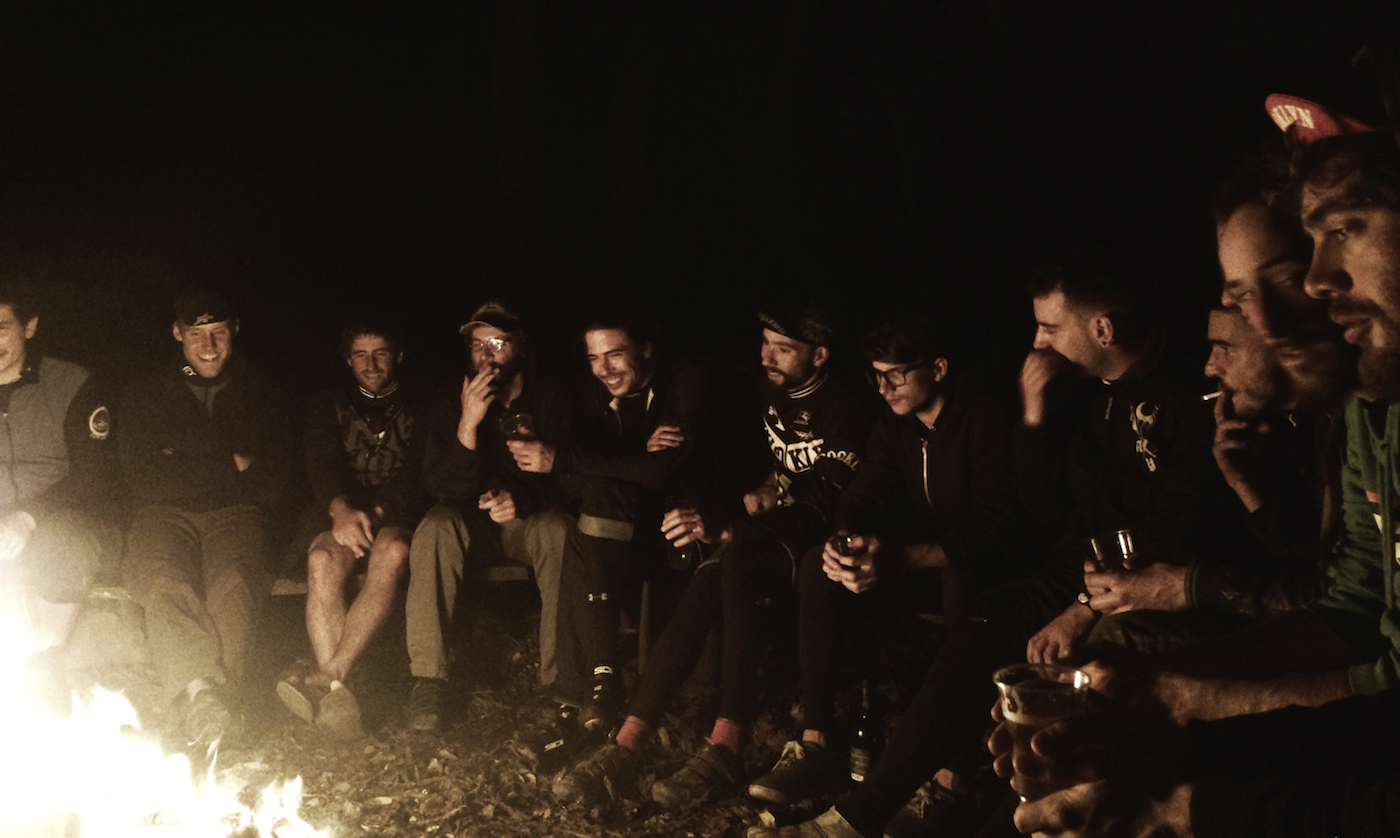
In my interview, PHK stressed how important it was to eat healthily, since messengering is a sport. I tried at first, then noticed nobody else cared: with that much exercise, you can eat pretty much anything. Surprisingly, quite a few colleagues smoked, as if breathing car exhaust all day were not enough, and there was plenty of beer after work. After watching Dead Fucking Last, admittedly a parody, my dad was a little surprised by the company I kept.
By a happy coincidence, the 2013 Cycle Messenger World Championships took place in Lausanne. It was a blast. I did not compete, but helped Yoann run one of the checkpoints.
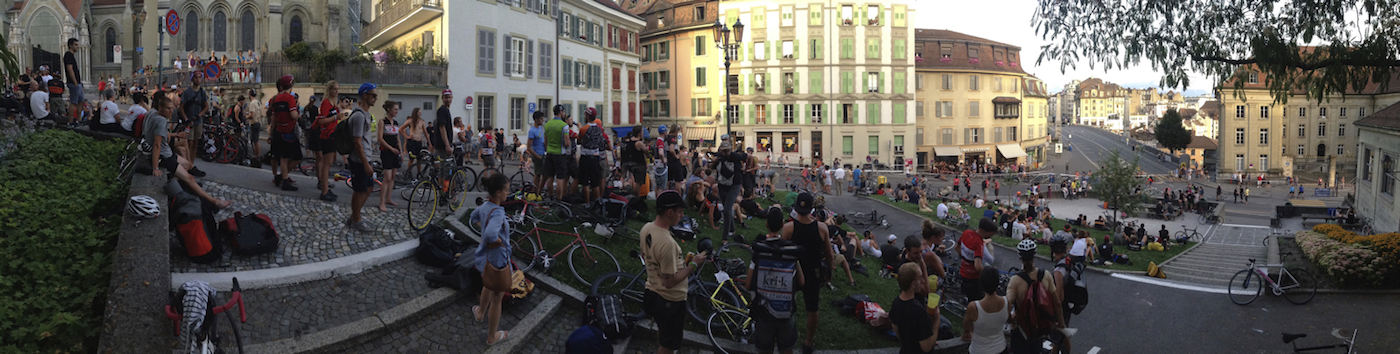
Alleycats, informal street races, are another part of messenger culture. I had wanted to take part in one for years, but always backed out. After moving to Zürich in May 2014, I finally rode the Cats The Rabbit alleycat, where I got my first tattoo.
There are plenty of films about bike messengers online, such as this portrait of Bill, a 52-year-old who delivered pizza by bike, this video of an alleycat at the 2014 championships in Mexico, and this documentary about the messengers at Vélocité in Lausanne.
Epilogue
I talk about my year as a bike messenger a lot, for good reason: I loved it. It is probably the second-best thing I have done, after Building Virtual Worlds at Carnegie Mellon. For a while, my dream was to do web development three days a week and messenger work two days a week.
2013 was also meant to be a sabbatical, and I had plenty of free time, which I did not put to much use. The lesson: have a plan before your sabbatical starts, or nothing will happen.
- Sun Rhyno Lite rims, meant for touring, laced to Shimano XT hubs: a bit heavy, but they last. ↩︎
- Military service is mandatory in Switzerland. ↩︎
- Because the client’s assistant would rather not walk to the post office. ↩︎
- Instead of the standard radio alphabet, PHK came up with a list of first names that sounds rather odd to French speakers: Anna Bertha Cesar Daniel Emil Frederic Gustave Herve Ida Jean Kilo Ludwig Martha Nathan Otto Pierre Quentin Rodolphe Susanne Theodore Ursula Victor Walter Xavier Yvonne Zorro. ↩︎